

An Easter sermon preached at Putnam and Hebron Presbyterian Churches in NY in April 2026
Text: 1 Peter 1:3–9
Friends, here we are once again, celebrating the greatest season of the year. Easter! The resurrection of the Lord. In the Easter good news, we not only revel in God’s intention to save us from ourselves, to save us to God’s love, but we also bask in the confidence that God can accomplish our salvation. How do we know this? Because God raised Jesus from the dead.
This is the heart of the Gospel, that the whole world—including us—is subject to the powerful grace of God in Jesus Christ. That Gospel was accomplished at Easter, and it is what makes this the greatest season in the Christian year.
We can affirm the goodness and wonder in Easter, though, and still struggle to revel in it as much as we should. The joy and goodness of this season can be hard to sustain in our present moment, when so many of us are weighed down with anxiety over the world, our nation, our families, our friends, ourselves.
The economy brings us worry, as basic necessities get harder to afford, despite politicians trying to convince us otherwise. The hubris of technocrats threatens to overturn what it means to be human—with machines to drive our cars, do our thinking, and tell us right and wrong.
Illness haunts us, exacerbated by the struggle millions of Americans have securing health insurance, our nation having decided that health is a commodity we are comfortable letting corporations put a price tag on. The airports are a mess, the world thinks we’ve gone nuts, and many of our neighbors have learned to dislike each other because they don’t share each other’s politics.
With all that’s going on in the world, we might be excused if we struggle to appreciate the Easter good news. Where’s the good news in all that surrounds us? Well, in a word, nowhere, and that’s kind of the point of Easter. The good news of Easter isn’t to be found in economic prosperity, technological advances, or the brilliant minds governing us from Washington DC. The good news that saves us is to be found in God. The good news is in the truth declared to us in the crucifixion and resurrection of Jesus Christ: that our economy and our politics and our health and our spiritual lives and our families and our local communities and our world are all caught up in the saving grace of God in Jesus Christ. Whether the signs of that grace are obvious to us or seem scarce, God’s grace is here—triumphantly here—working in all of us by the Spirit of the living Christ and moving us along an arc toward the kingdom of God.
Continue reading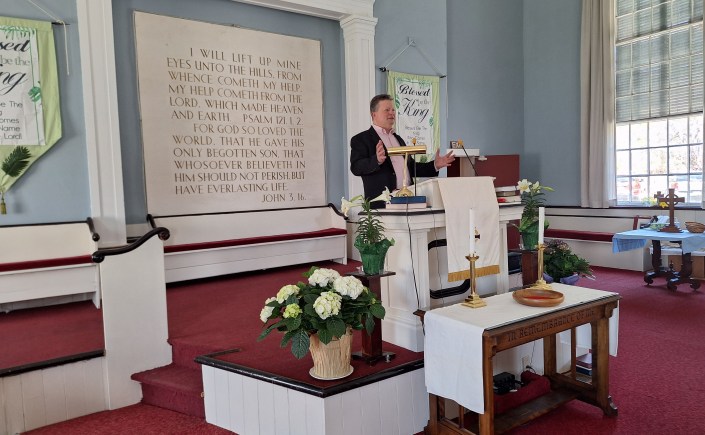



You must be logged in to post a comment.