IRS just removed limits on church involvement in politics

Why that’s great news for liberal Christianity

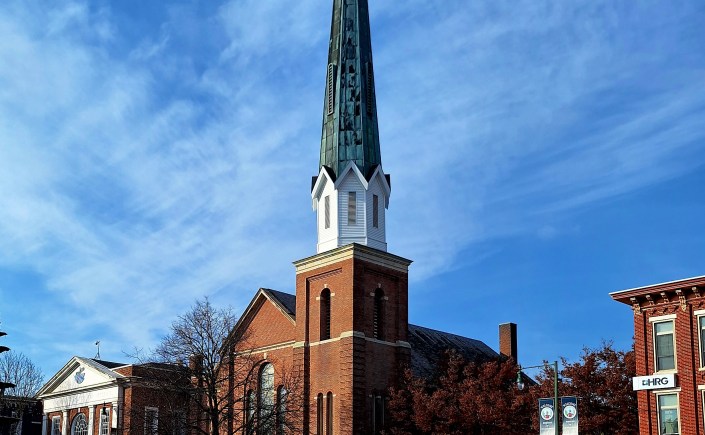
Church and State: A sermon preached at the Congregational Church of Middlebury (VT) on July 13, 2025

Texts: 1 Samuel 8:4–22a; Romans 13:1–7

Friends, I would like to think with you this morning about two things that the aphorism tells us we should never discuss in polite company, certainly not together: religion and politics. You may have seen that the IRS released a policy change this past week on churches and other tax-exempt charitable organizations engaging in partisan politics. For decades, churches have been barred from endorsing particular candidates for public office, at risk of losing their tax-exempt status. This is a result of the so-called Johnson Amendment of 1954, and it has been the policy of the IRS ever since: churches cannot endorse specific partisan candidates for public office. But that prohibition has been skirted and violated by churches without much repercussion, sometimes creatively and more recently rather boldly. Conservative evangelical organizations have sued to change the policy, and this week, the IRS said OK. Churches can engage in partisan politics with no penalty.

It will surely come as a surprise to some of you that I think this is a remarkably good development. I will make the argument this morning for why I think it is a good development—more precisely, I will make four arguments: a theological argument, a historical argument, a practical argument, and, finally, a moral argument.

Continue reading

Capacious Christianity

A Pentecost sermon preached at the Congregational Church of Middlebury, VT, on June 8, 2025

Friends, I want to suggest to you today that we are ripe for a new Pentecost. The world in our moment needs people who are set afire and possessed with a message of grace and hospitality and inclusion, to push against the destructive trinity of arrogance, fear, and dehumanization that now reigns. We need a new Pentecost. We need the rebirth of capacious Christianity.

Click the link below to watch the full sermon:
https://www.facebook.com/MiddUCC/videos/3955528118003925

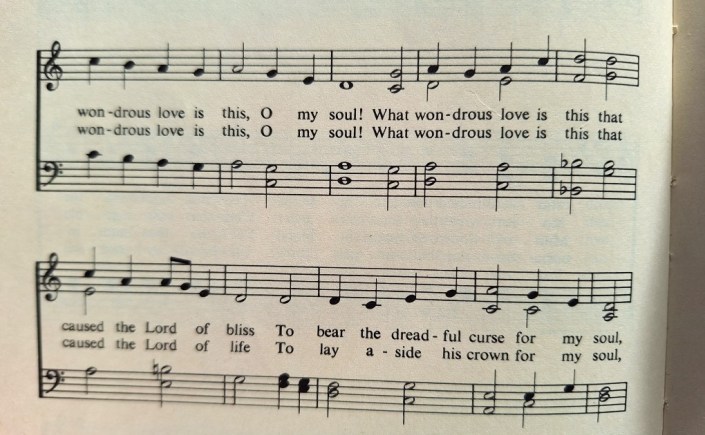
Wondrous Love

A sermon delivered at Putnam United Presbyterian Church (NY) 3/24/2024
Palm Sunday

Holy Week can be a particularly difficult week for Christians to focus, because there is a lot going liturgically and theologically. This one week puts before us the trajectory of Jesus’ final days, from popular hero to humiliated scapegoat. We witness the crowds hearing what they wanted to hear and seeing what they wanted to see in Jesus early in the week, only to reject him when they realized he was preaching a kingdom message that would challenge them, not placate them. They realized that he was unwilling to play the game that other would-be political leaders played. He would not promise to overthrow the Romans and their vermin sympathizers on day 1 of his rule. Instead, he talked on and on about a kingdom of love and righteousness and peace. And for this, the people’s chants of “Hosanna in the highest!” turned into mob taunts to hang him, and they abandoned him to the brutal devices of the Roman Empire.

Continue reading

The Devil You Know

Artwork: Satan Arousing the Fallen Angels, John Martin, 1824

A sermon delivered at Hebron United Presbyterian Church 10/8/23
Scriptures: Exodus 20:1–20; Matthew 4:1–11

When I was young, my mom had a record collection that included a couple of Flip Wilson’s comedy albums. Flip Wilson was a comedian popular in the 60s and 70s. For a period of time in my teenage years, I listened to those albums constantly. This was before the internet, before cable or satellite TV made it to the boondocks where I lived, so this was my entertainment. Listening to Mom’s Flip Wilson records over and over again.

Flip Wilson had one particular series of sketches I found absolutely hilarious. These sketches featured him telling stories about Geraldine, who he sometimes imagined as a preacher’s wife, who had a penchant for spending her husband’s money on things she didn’t need and blaming it on the devil—the devil made me do it, she would say. In his TV comedy skits, he dressed the part of Geraldine, which of course didn’t come through on the albums, but the voice he did for Geraldine was funny enough.

The sketches were hilarious because Geraldine would concoct elaborate stories for how the devil made her do things of which her husband disapproved. The devil made her buy that expensive dress, she protested. The devil made her go into the store and try it on. The devil told her how good she looked in that dress. She would put up a fight—“devil, no,” she would say—but ultimately, the devil made her sign her husband’s name to a check. The devil made her buy that dress.

Continue reading