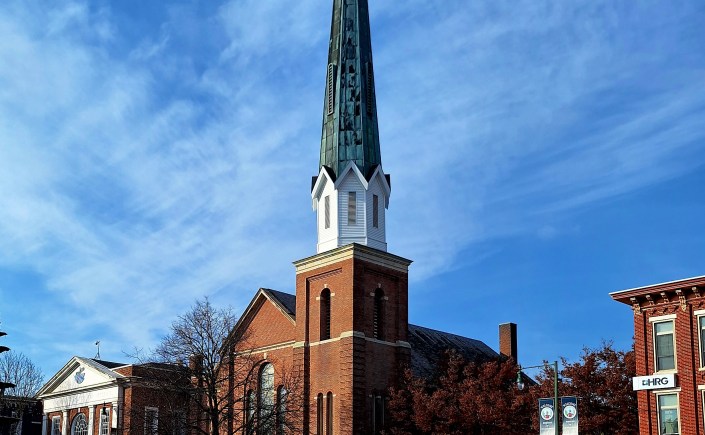
Big news for friends and followers of this site! As of July 1, 2026, I will be drawing my 25 years of teaching at Middlebury College to a close. The wonderful people of Central Presbyterian Church in Chambersburg, Pennsylvania, have called me to be their pastor and head of staff. While I will miss my colleagues, friends, and students at Middlebury, I am so excited for this opportunity to preach weekly and engage in the project of Capacious Christianity with such a great congregation. Plus, Elizabeth and I will be returning to our Pennsylvania roots! Included below is video of last Sunday’s service at Central, where I preached and the congregation voted on my call. See for yourself what a vibrant community “Central on the Square” is!
For the next three weeks (June 5, 12, and 19), I have the great pleasure of leading worship with my friends at Putnam United Presbyterian Church, in Putnam Station NY. Next week also marks the 25th anniversary of my ordination as a minister of the Word and Sacrament in the Presbyterian Church USA. The kind folks at Putnam have hosted me as a guest preacher for over ten years, so I am deeply grateful that they were willing to share this milestone with me. It is so much more meaningful to observe my ordination anniversary with friends, and what better way to observe it than with a small Presbyterian congregation that reminds me of the one that raised me in the faith? So if you’re in the area this month, drop in for worship at 10 a.m. I am certain you will find the people at Putnam United as warm and welcoming as I have all these years.
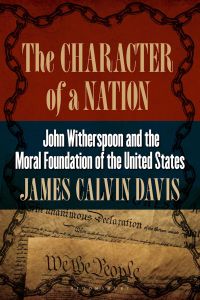
I’m thrilled to announce that my latest book is now available to order! Official launch information will follow soon. In the meantime, here is a description and link to the publisher’s website:
How can celebrating the “holy days” of American culture help us to understand what it means to be both Christian and American? In timely essays on Super Bowl Sunday, Mother’s Day, Independence Day, Thanksgiving, and other holidays of the secular calendar, James Calvin Davis explores the wisdom that Christian tradition brings to our sense of American identity, as well as the ways in which American culture might prompt us to discern the imperatives of faith in new ways. Rather than demonizing culture or naively baptizing it, Davis models a bidirectional mode of reflection, where faith convictions and cultural values converse with and critique one another. Focusing on topics like politics, race, parenting, music, and sports, these essays remind us that culture is as much human accomplishment and gift as it is a challenge to Christian values, and there is insight to be discovered in a theologically astute investment in America’s “holy days.”
I am leading a study for my home congregation on “Being the Body of Christ in a Socially Distant World.” We are considering the ways in which the pandemic has challenged our habits of being church, but we also are talking about the new practices we have discovered that may be useful to our ministry and fellowship even when this present darkness is behind us. This coming week, we will be talking about virtual worship, particularly the virtual practice of Communion, or the Lord’s Supper. The following are resources I assembled to give them food for thought on the subject. Perhaps they will be useful to some of you as well.
~~~~~~~~~~~~~~~~~~~~~~~~~~~~~~~~~~~~~~
Take a look at these five short and accessible articles wrestling with the impact of COVID-19 on Christian worship, especially the celebration of Communion.
An NPR story that confirms that much of our experience with virtual church—good and bad—is being felt by churchgoers all over the country:
2. A Lutheran makes the argument for why we should not do the Lord’s Supper at home during the pandemic. Does his argument hold if we don’t subscribe to the Lutheran understanding of Communion? What is the Lutheran understanding? Wait—what is our understanding of Communion?
3. An “advisory opinion” of the Presbyterian Church (U.S.A.) on whether it is appropriate to celebrate Communion virtually. Try to read past all of the polity references (i.e., who has authority) to understand what the meaning of the Lord’s Supper normally is in this denominational tradition, and how it can be justified virtually in times of pandemic. Does this perspective from the UCC’s “cousin” in Reformed Christianity help us think about our practice?
You must be logged in to post a comment.