He Is Risen!

Happy Easter! Below is the text of an Easter sermon I preached a few years ago at the Congregational Church of Middlebury, Vermont. And here is recording of the whole worship service. Hope you have a blessed Easter.

Witnesses of These Things

I was having breakfast with a friend of mine this week, a colleague at the college, and the subject of church came up. My friend grew up in the Roman Catholic Church, but he doesn’t associate with his religion anymore. “Someday you and I need to have a conversation about this church thing,” he said to me. “I have to admit that I’ve distanced myself from that stuff in my middle age. I guess I’m too much of a scientist; I need things to be empirically validated to believe them. I’d love to talk to you about how you keep religion and the life of the mind together.”

Many of us have had similar conversations; some of us have had them with ourselves. We’re not always sure we buy all of the things read and mentioned and claimed here at church. What do we do with the disconnect between the assertions of the faith and the requirements of the critical mind?

Continue reading
Living Like It Is Not the End of the World

A sermon preached at Hebron United Presbyterian Church (NY), November 15, 2020

Text: 1 Thessalonians 5:1–11

 If you heed the dire warnings of social media—and some conventional media outlets—you will know that we are living in the end times, for the end of the world as we know it began on November 3rd. If not the end of the world, then we are living the end of democracy. Depending on what political perspective you’re reading at the time, the end of our country (or the world) is coming as a result of encroaching socialism or persistent fascism. Be vigilant, for you know not what day the end will come, but it is coming!

This kind of dire prediction of the cataclysmic end of human history is called apocalypticism, and though the Bible didn’t invent apocalypticism, it contains a bunch of it. Some of the Old Testament prophets engaged in that end-times talk, and of course the Book of Revelation is all about the end of human history, the final battles between God and Satan, and the ultimate triumph of God’s Kingdom. The earliest generation of Christians thought this end of the world was coming very soon. Jesus, the Messiah of God, had come to proclaim the nearness of God’s Kingdom. Jesus was crucified, but he rose from the grave as a testament to God’s power to save. And then he ascended to heaven to sit at the right hand of God the Father, promising to come again to usher in God’s final Kingdom on earth.

Continue reading

Character as Social Witness

I had the great pleasure this past Sunday of celebrating World Communion Sunday with Westminster Presbyterian Church in Albany, NY. The topic of my sermon was “Character as Social Witness.” The service was particularly meaningful because joining us at the Table was Rev. Akrong from Westminster’s partner congregation—Greenwich Meridian Church—in Tema, Ghana. Thanks to the Rev. Heather Kirk-Davidoff for the invitation to be part of this meaningful service:

https://www.youtube.com/watch?v=tEqXbsJcK54

Palms and Pies

A sermon preached at the Congregational Church of Middlebury, Vermont, on April 14, 2019

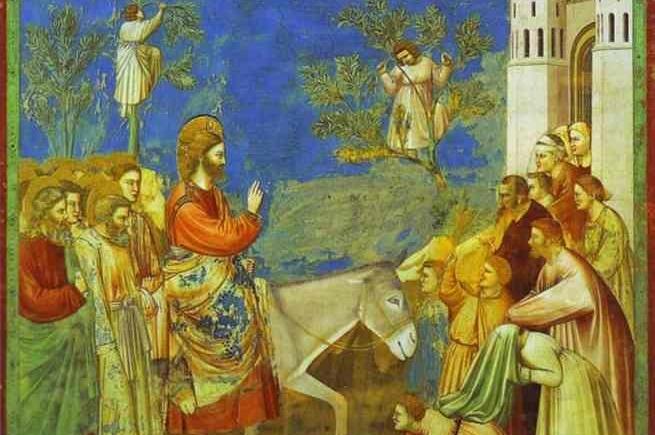
There is a movement within Christian worship in the last couple of decades to observe this day of the Christian year as Passion Sunday, or Palm/Passion Sunday, instead of just Palm Sunday. In other words, on this Sunday we observe in worship the triumphal entry of Jesus into Jerusalem, but in the deliberate context of the rest of Holy Week. That often means including Scripture not only about the entry but also about the Passion of Christ, and to have the movement of our hymns go from “All Glory, Laud, and Honor” at the beginning of the hour to “O Sacred Head, Now Wounded” at the end. This tendency toward observing Passion Sunday has historical connections, but the main concern that motivates it is to ensure that churchgoers get the whole picture. The reality is that most Protestants don’t come to church between Sundays, so if we observe only the triumphal entry today, most churchgoers will go from happy day (Palm Sunday) to happy day (Easter) with no opportunity to reflect on the all-important moment of Christ on the cross. And without the cross, however we interpret it, we do not understand the significance of Christ.

I think there’s a lot of wisdom in the move toward Passion Sunday and the concerns that motivate it. And yet there is cost. The cost is that in our movement toward the cross we do only a quick run past the spectacle of Palm Sunday. In our effort to encapsulate the full meaning of Holy Week in a Sunday service, we risk spending very little time on the beginning. The triumphal entry disappears in the shadow of the cross, and we leave church wondering, “Why did we pass out those palms?”

Continue reading