A sermon preached at Putnam Presbyterian Church, NY, February 11, 2024
Happy Super Bowl Sunday! Now, I know that the church calendar calls this Transfiguration Sunday, the Sunday before the beginning of Lent when we observe the story of Jesus climbing a mountain with three of his apostles, communing with great Hebrew prophets, and being revealed as the Messiah of God. But let’s be honest: you did not wake up this morning thinking, “Oh goody, it’s Transfiguration Sunday!” But many of us probably did wake up and say to ourselves, “Hey, the Super Bowl is on today!”
Super Bowl Sunday has become a ritual of American life. Even if your favorite team is not playing, even if you are not a regular football fanatic, chances are pretty good that you will sit down in front of the game tonight. Millions of Americans will do just that. And not just for the game: the hours-long pregame shows, the commercials, and the halftime show have become cultural events as well. The Super Bowl brings Americans together like few things do these days.
The Super Bowl is a religious event in some ways—a ritual of civil religion. About seven or eight years ago, I wrote a sermon called “Why God Loves Football.” A revision of that sermon ended up as a chapter in my most recent book, American Liturgy: Finding Theological Meaning in the Holy Days of US Culture. The point of that book was to say that many holidays in American culture can be understood as significant from a Christian point of view; Super Bowl Sunday is no exception. In that book chapter, I made a tongue-in-cheek case for why football was the holiest of all sports, and why I think it holds a special place in God’s heart. The real point of that sermon, though, was that football—and sports—can symbolize some good things about God and human life and culture, like the importance of family, community, and the gift of fun and leisure.
A sermon preached at Putnam United Presbyterian Church Labor Day 2023
Texts: Isaiah 32:1–8; Luke 1:46–55
This holiday weekend holds a lot of personal meaning for me, and I feel it acutely these days. My dad just passed away last year. My dad was a Pennsylvania coal miner, and although he stopped working in the mines due to injury when I was still a boy—or maybe because of that traumatic moment in my family’s life—I have always associated Labor Day with my father. Too many of us treat Labor Day now as just another federal holiday, just another three-day weekend, one more chance to grill some hot dogs before the summer is over and schools begin in earnest. But our celebration of labor and the labor movement in this country should be much more profound. Labor Day is a day set aside to celebrate the American worker, all people whose work maintains this country’s productivity and vitality, but especially those who do the hard work, the physical work, the essential work few people want to do but must be done, the work that is never glamorous and seldom celebrated. Labor Day should be a day to honor that American worker.
It’s also a moment for us to reflect on the history of the labor movement and give thanks for the benefits from that struggle that we now take for granted. In order to reflect on that history, though, we have to know it, which fewer and fewer of us do. We need to remember collectively the brutalizing working conditions in coal mines, steel mills, and factories 100 years or so ago, and remember the ways that wealthy industry barons controlled every aspect of their workers’ lives, on and off the job. We need to revisit the ways industrialists and government leaders actually conspired to keep laborers from organizing, often violently. We need to remember the years it took for major industries in this country to unionize and for workers to get their seat at the negotiating table. Most of all, we need to give thanks for the employment protections that those negotiations yielded, benefits many of us take for granted: a minimum wage, a reasonable work week, restrictions on child labor, overtime pay, health benefits, disability protections, and more.
A sermon preached in August 2023 at Hebron United and Putnam United Presbyterian Churches
Sermon Text: Romans 11:1–2, 25–36
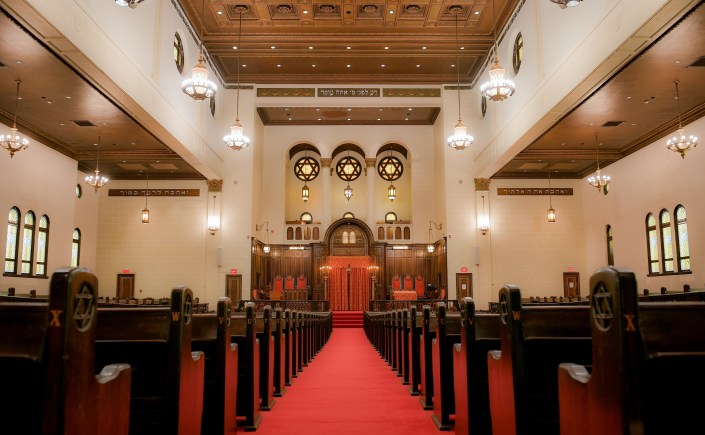
Many of us probably noted in the news this summer the conclusion of the case involving the Tree of Life Synagogue shooting in Pittsburgh, Pennsylvania in October 2018. Robert Bowers was convicted in June and sentenced to death earlier this month for killing eleven people gathered for worship at the synagogue. The sentence itself is worthy of a sermon, but not today. Today it is enough for the resolution of that case to remind us that antisemitism remains an acute problem in the United States. More than 3,600 acts of antisemitic hatred were committed in 2022, the largest number for a single year since the Anti-Defamation League started tracking such activity in 1979. Antisemitism is no more a relic of history than racism is. It is not something that plagued us in the past but that we have gotten over, an argument you hear with naïve frequency about racism. Racism remains a national problem, and so does antisemitism. In fact, both of these deeply rooted national sins have been given new permission in the caustic political culture in which we find ourselves.
And—like racism—something that Christian Americans need to wrestle honestly with is the complicity of our religious tradition in this national sin. Truth be told, antisemitism is a problem in the US because Christianity is so dominant in this country, and whether we like to admit it or not, antisemitism goes way back in our religious tradition.
A couple weeks ago, I saw a story in the news about the play-by-play announcer for the Oakland A’s being fired after more than twenty years of broadcasting for the team. Apparently, the afternoon before his last game, Glen Kuiper visited the Negro Leagues Baseball Museum. He got an extensive tour of the place, and he was so impressed with the museum and the history of the barriers Black baseball players endured, and the depth to that history that he didn’t know—even though he worked in baseball—that he wanted to talk about it during the baseball game. Unfortunately, though, when he started talking about his experience, he fumbled the name of the museum, and it came out sounding an awful lot like the other N-word that no one should say in private, let alone over a broadcast.
The reaction was swift and furious, just as you’d expect, and in came the calls for Kuiper to be fired. Kuiper insisted that he did not mean to say the wrong word, he just got tongue-tied—an explanation that seems plausible to me, someone else who spends much of his profession in public speaking. Sometimes my brain and my mouth don’t communicate effectively, and what my brain wants to say does not come out the way I thought it. And sometimes, in situations less wrought than this one, in an effort to make sure I don’t say something a certain way, I get so focused on avoiding that construction that my brain sends that signal and I end up saying it precisely the way I was trying to avoid. (I do that with names all the time.) I can imagine that Kuiper, a White man, was already feeling a little funny saying the word “Negro,” because even though it’s in the name of the museum, in a lot of other contexts it is not a positive word to use to refer to Black persons. So even that hyper-sensitivity could have caused him to misspeak.
This is my first Father’s Day without my dad, who passed away suddenly in January. Still processing his death nearly six months later, I find solace in Jesus’ promise, nestled in the Gospel of John, that God’s house has many rooms reserved for the saints who pass from this life. I get some peace (and a laugh) from imagining Dad hanging out with the saints, both noble and modest, in God’s grand hotel. Dad was an insatiable socializer, so he probably makes his way around most of the rooms of that divine establishment each day, sharing shards of gossip he picked up from the rooms he had been in before, and asking each of his hosts the same question he asked his children, siblings, or friends when he dropped by their houses in this life, usually unannounced: “You got any coffee?”
Just a few verses after John’s Gospel offers us this image of eternal fellowship in God’s abode, Jesus assures his disciples, “If you know me, you will know my Father also. From now on you do know him and have seen him.” Like all the language we use to capture the essence of God, describing God as “Father” is an idea borrowed from human experience to try to describe the indescribable. And with due acknowledgment of the problems that “God the Father” language has created, I still think parental language discloses something important about the character of God. Like the ideal parent, God possesses undying and unconditional love for us, and is willing to do whatever it takes to be in relationship with us. And by referring to himself as God’s Son, Jesus’ parent-child metaphor tells us something essential about him too. As the ideal dutiful son, Christ is the reflection of the best in his Father’s character.
The metaphor of father and son captures important truths about God in Christ. But I think it also can tell us something wise about what it means for some of us to be fathers and sons. For when the Bible borrows the idea of fathers and sons to describe God in Christ, it transforms how we think about human fathers and sons. God becomes our ideal for those roles, the new standard for those relationships. The character of God redefines what it means to be a father. The devotion of Christ redefines what it means to be a son.
If Jesus is a model for the ideal son, then one thing his model suggests is that sons are supposed to be the best reflection of their fathers. Perhaps that is an important reminder, especially on Father’s Day, especially for the son of a father who can no longer be seen. Perhaps it is a reminder of my duty to ensure that people who never knew Bill Davis before he died nonetheless feel as if they know a little bit about him, because they have been around me.
I think that is already the case, even without a ton of effort on my part, a testament to how powerful an influence my dad has been on the person I have become. I have lived a very different life than my dad did; that was part of his intention for me, I think. Dad was a manual laborer his whole life, a coal miner until he was injured, and then a highly skilled amateur mechanic, electrician, welder, and builder all his life. By contrast, I have spent nearly my entire working life behind a desk, in a pulpit, or in a classroom. My dad had just a high school diploma, and by his own account, achieving that was not a foregone conclusion! I went to college, and I eventually earned a Ph.D. My dad lived in economically strained circumstances his entire life. I have a secure teaching position with tenure. Except for his time in the Army and a brief stint in Cleveland, my dad lived his whole life in his hometown, a tiny mining town in western Pennsylvania. I am not much more traveled, but I haven’t lived in my hometown for thirty years.
Dad and I lived very different lives, and yet, if you know me, you know my father—at least a bit. That’s how much he has shaped me as a person. I’m not nearly as talented at building or fixing things as he was, but I love doing it—and I hate hiring other people to do my chores—because of him. My love of the outdoors and manual labor, my strong preference for cheeseburgers over formal dining, the fact that I am infinitely more comfortable in my garage than at any college function, and my penchant for seeing class injustice everywhere all come from being his son. His blue-collar work ethic, his impressive problem-solving skills, his silly sense of humor, his habit of helping strangers, his militant insistence on holding doors for other people—I can see those reflected in me.
Some of the character I inherited from him makes me a stranger and pretender in the academic world I now occupy, but that just means the reflection of the father shines bright in the son. I used to try to mask it when it seemed professionally out of place. Now I celebrate that I am the token hillbilly on my school’s faculty. If you know me, dammit, you will know my father also.
On this Father’s Day, while I am missing my own dad, the Gospel offers comfort in the promise of a future together again, in the many rooms of God’s communion. In the meantime, though, it also gently reminds me that there is work still to be done to discharge the duties of a son to a father, namely, to live my life that others will know the best of my father. But that responsibility is also consolation. It reminds me that those we lose to death are never truly gone. As long as their lives and legacy are reflected in us, we remember, cherish, and honor them. Those who are no longer here with us nonetheless live on, in our love and in our character, even while we hope for a future in which we can share coffee and gossip with them again.




 James Calvin Davis
You must be logged in to post a comment.